 EN
EN
 IT
IT
Premio 2020, settima edizione: "INCLUSIONE DELLA DISABILITA' NEL MONDO DI RAFFAELLO"
FIRST PRIZE FOR STUDENTS FROM ITALIAN INSTITUTIONS
Studenti/Gruppo:
D'AVINO Lucia
Accademia di Belle Arti di Napoli | NAPOLI NA ITPLACED IN A CORNER
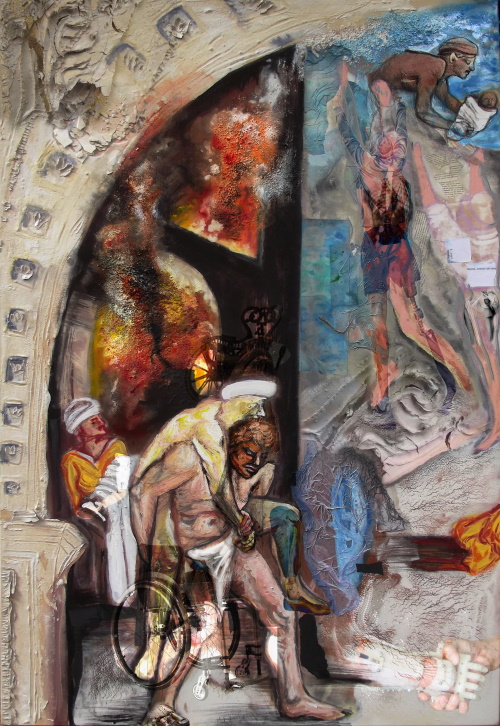
L'opera “Placed in a corner” riprende “l’Incendio di Borgo” affresco di Raffaello Sanzio e precisamente il particolare del giovane che carica sulle sue forti spalle il padre anziano. Dunque il tema della disabilità, intesa come cura e attenzione emerge con forza nella figura del giovane. Egli se ne fa carico, ponendosi quasi come supporto e tramite tra due generazioni. Tra Rinascimento e Contemporaneo l’opera si propone, con la materia pittorica e le applicazioni digitali, diriflettere sulle grandi innovazioni tecnologiche in ambito medico con l’invenzione di protesi e ausili che permettono alle persone con diversi gradi e tipi di disabilità di condurre nel migliore dei modi la propria vita. Tuttavia oggi solo una persona su dieci, nel mondo, ha accesso a questi gtrumenti. Nell’opera di Raffaello queste persone non appaiono mai da sole, ma sono incluse in gruppi o folle che ne formano e condividono la storia, pertanto anche noi dobbiamo agire allo stesso modo e garantirgli l’accesso e l’ inclusione.
PLACED IN A CORNER
The work "Placed in a corner" is a retelling of Raffaello Sanzio's "Incendio di Borgo(BLAZE IN BORGO)", particularly it focuses on the detail of the young man carrying on his shoulders his elderly father. The theme of disability, seen as care and compassion, shines throughout the image of the young man. He takes it on, acting as a support and also as a link between two generations. The artwork is in a balance between the Renaissance and the Contemporary era, with the use of traditional painting and digital applications. It suggests to reflect on the great technological achievements in the medical field, where prosthetics are helping people with different kinds of disabilities to live their best lives. Unfortunately only one person out of ten has access to these facilities. In Raffaello's work these people are never portrayed alone,they are included in groups or crowds, their stories are shared by the latter. We must also act the same way, providing access to facilities and working together towards inclusion.